The first time I packed a cooler for our Spokane to Boise drive, I did it wrong. I tossed in a bag of ice, piled sandwiches on top, and by the time we hit Ritzville the ice was soup and the turkey was floating. My husband Dave still brings it up. So when I tell you I have a system now, I mean a system tested over about two years of that six hour drive, plus camping weekends at Lake Coeur d'Alene and a Seahawks tailgate in Seattle. The cooler that made it click is the Lifewit Cooler Bag, the large size, and it is the reason we actually eat lunch in a rest area instead of stopping for fast food.
This guide is the exact routine I use. It works for a family of four in a 2018 Honda Odyssey, it works for a two hour drive to a youth football game, and it works for a full day at the lake. You do not need a hard cooler and you do not need loose ice. You need a soft-sided cooler that holds its temperature, frozen water bottles, and a little planning the night before.
The cooler that made our road trips easier
The Lifewit Cooler Bag is the large soft-sided cooler I have used for two years of family trips. It folds flat when empty, carries over the shoulder, and keeps sandwiches, fruit and drinks cold through a full driving day.
Amazon Check Today's Price on Amazon →Step 1: Start with a clean, cold cooler
The night before we leave, I wipe out the Lifewit Cooler Bag with a damp cloth and leave it open on the kitchen counter. A clean cooler is not just about crumbs. Any warmth inside the lining has to be cooled down by your ice, and that is wasted cold. If the bag has been folded in the garage for a month, it needs a few minutes to air out and come back to shape. I learned this the hard way before a camping weekend at Lake Coeur d'Alene: I packed a bag that had been folded since the previous fall, and the lining smelled musty for the whole trip. Now I give it a wipe and an airing the night before, every time.
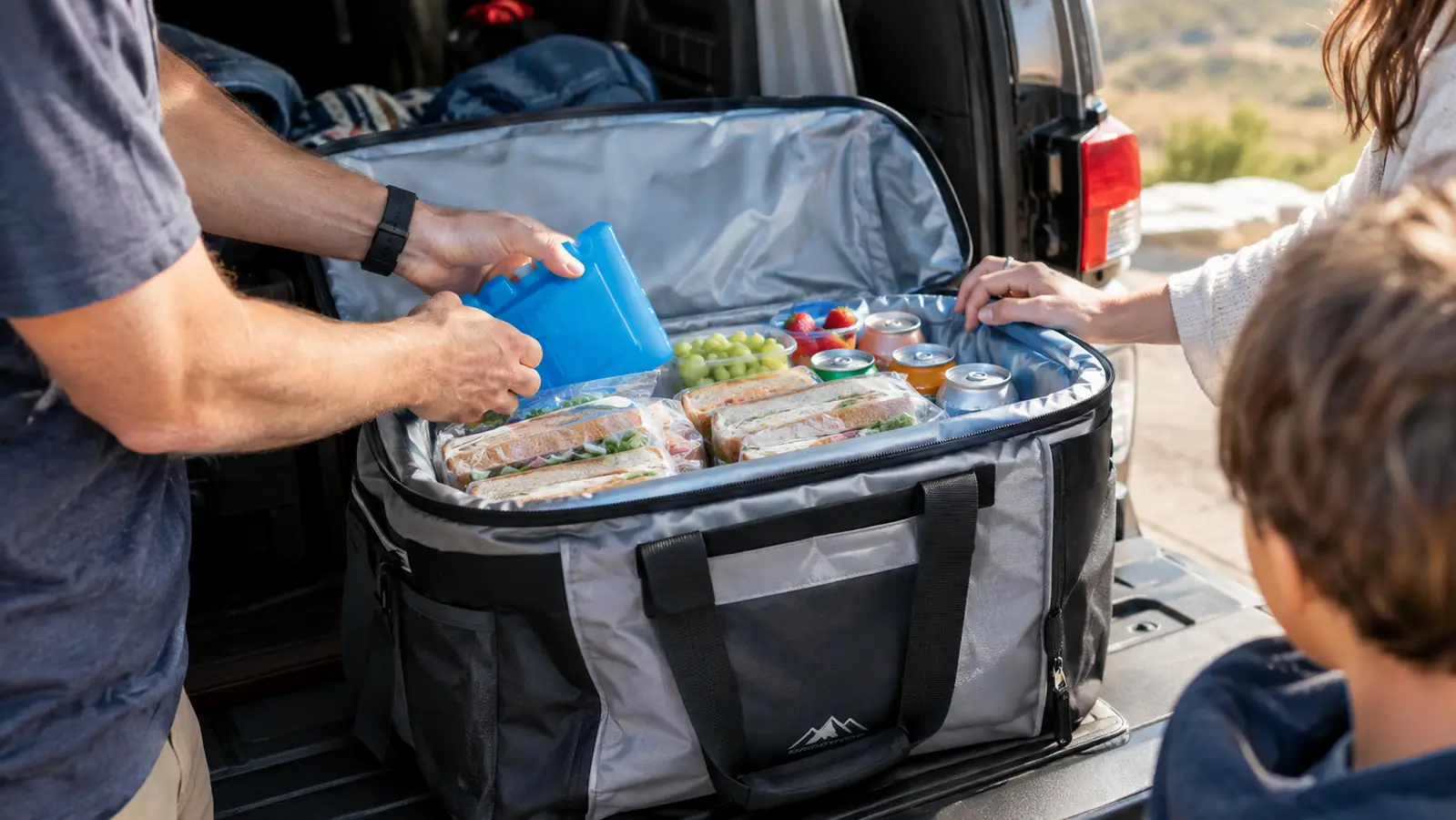
Then I put the frozen items in first. I keep a stash of freezer packs in our deep freeze, and I also freeze four or five water bottles. The bottles do double duty: they keep the cooler cold and they become cold drinking water by the afternoon. I lay them flat along the bottom of the Lifewit bag, covering as much of the floor as I can. That bottom layer is your cold foundation. On a hot July trip last summer, I counted nine frozen bottles and packs along the bottom, and the sandwiches on top were still cool when we pulled into Boise at dinner time.
One thing I learned the hard way: do not skip this step and do not use loose ice. Loose ice melts into a puddle, soaks the sandwiches, and makes a mess in the car. Frozen bottles and packs melt slowly, keep everything dry, and you can refreeze them when you get to my parents' house in Boise. The Lifewit bag's leakproof lining has saved me more than once, but I would rather not test it with a puddle of melted ice sloshing around the floor of the Odyssey.
Step 2: Pack food in the order you will eat it
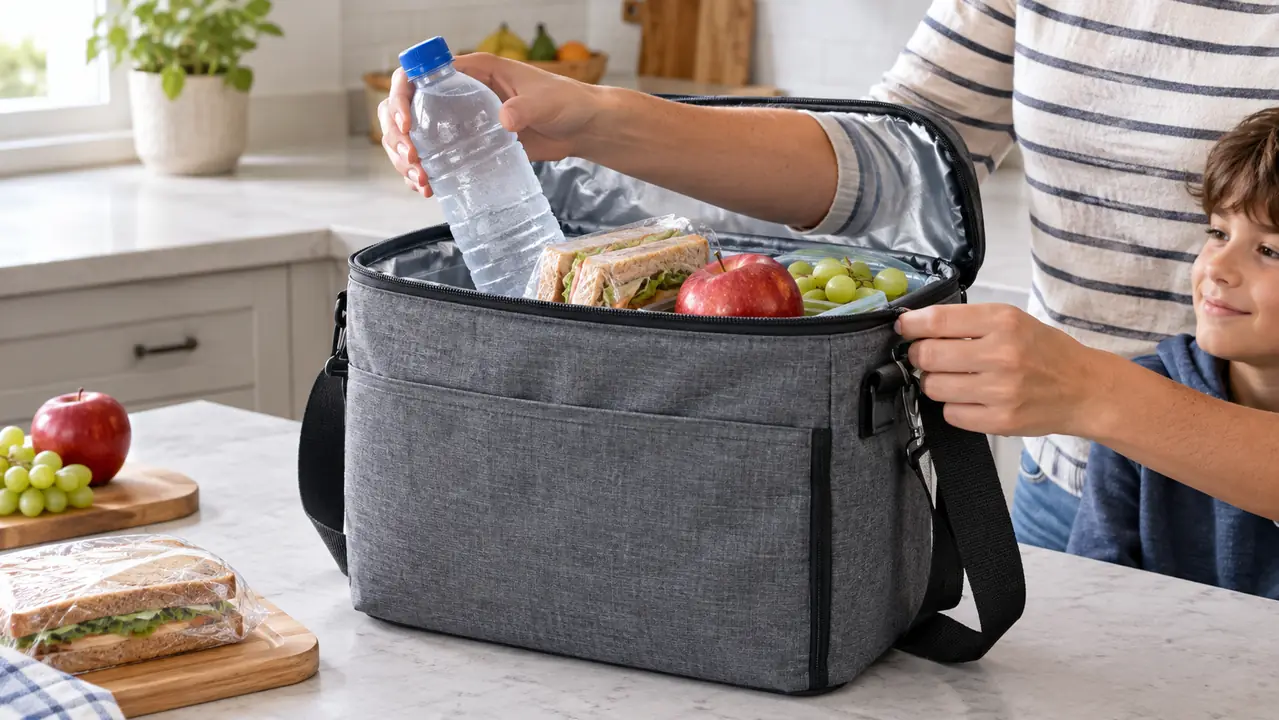
This is the trick that changed everything for me. I pack the cooler upside down, meaning the first thing we will eat goes on top. Breakfast snacks and morning drinks go in last, right under the zip top. Lunch goes in the middle. The stuff we will not touch until we get to Boise, like the raw chicken for dinner at my mom's, goes at the very bottom against the ice packs. On our last trip, that meant the kids could grab a string cheese without me digging through the whole bag at the rest stop.
For our standard Boise trip, that means a bag of apples and string cheese on top, then the sandwich container, then the fruit and veggie cups, then the drinks. The Lifewit bag is deep enough that I can stand water bottles upright along one side, which fills the space better than laying them flat and leaves more room for food. I measured it once out of curiosity: the large size fits a full sandwich container, a bag of apples, six string cheeses, four fruit cups, and eight water bottles, with room left for a bag of pretzels on top.
I also separate anything that could leak. I put the grapes in a hard container, not a bag, and I wrap the sandwich container in a kitchen towel. The towel does two jobs: it cushions the food and it gives me something to wipe sticky hands with at the rest stop. On the way home from Boise last spring, a container of pasta salad tipped over despite the towel, and the leakproof lining wiped clean in about a minute. That is the kind of detail you do not think about until you need it.
Step 3: Keep raw food sealed and on the bottom
Food safety is the part nobody wants to think about, but it matters on a six hour drive. Anything raw, especially meat, goes in a sealed container or a zip bag, and it goes at the bottom of the cooler, below everything we will eat directly. That way, if anything leaks, it drips away from the ready to eat food, not onto it. I use a hard plastic container with a snap lid for raw chicken, and I double bag it in a zip bag for good measure.
The Lifewit Cooler Bag has a leakproof lining, which I appreciate more every trip. I have had a water bottle sweat all over the inside and the outside of the bag stayed dry. I have also had a container of pasta salad tip over, and the lining wiped clean in about a minute. That is the kind of detail you do not think about until you need it. On a trip to Caleb's football game in Pullman, a juice box leaked in the bottom of the bag, and I was able to wipe it out at the game and pack it again for the ride home.
If you are bringing anything that needs to stay really cold, like milk for Ivy or yogurt for Caleb, put it in the middle of the cooler, surrounded by other cold items. The center stays colder than the edges, especially in a soft-sided cooler that gets opened a few times during the drive. I pack the yogurt cups in the middle, between the sandwich container and the drinks, and they are still cold when we stop for lunch near Ritzville.
Step 4: Fill every empty space
An empty cooler is a warm cooler. Every pocket of air inside the Lifewit bag is space that has to be kept cold, and air does not hold cold the way food and ice do. So I fill the gaps. Small spaces get a juice box or a yogurt tube. Big spaces get a water bottle. If there is still a gap, I add a kitchen towel or a dishcloth, which also comes in handy. On the way to a Seahawks tailgate in Seattle, I filled the last gap with two more frozen water bottles for the drinks at the tailgate, and they were still mostly frozen when we parked.
This is also where I think about the weight. The Lifewit bag has a shoulder strap, and a fully packed large cooler can get heavy. I keep the heaviest items, like drinks, at the bottom and toward the center, so the bag balances when I carry it from the kitchen to the car. When it is in the Odyssey, it rides on the floor behind the front seats, where it does not slide around. I put a rubber mat under it on hot days, mostly to protect the carpet from condensation.
I do not overstuff it, though. The zip top needs to close fully, and a little room at the top lets the cold air circulate. If the bag is so full that the zipper strains, I move the drinks to a separate bag or leave a few things out. A cooler that does not close is a cooler that does not stay cold. I learned that on a trip to Lake Coeur d'Alene when I packed it to the brim and the zipper would not close; by the afternoon the drinks were barely cool.
Step 5: Keep it closed, keep it in the car, and know when to open it
The number one way to ruin a cooler is to open it every twenty minutes. I tell the kids: you get one opening at the rest stop, and that is it. Before we leave, I pull out everything we might want in the first hour, like the water bottles and a bag of pretzels, and keep that in the front seat. The cooler stays closed until we stop for lunch. On the Boise drive, we stop at the same rest area near Ritzville, and the routine is the same every time: open once, grab lunch, close it back up.
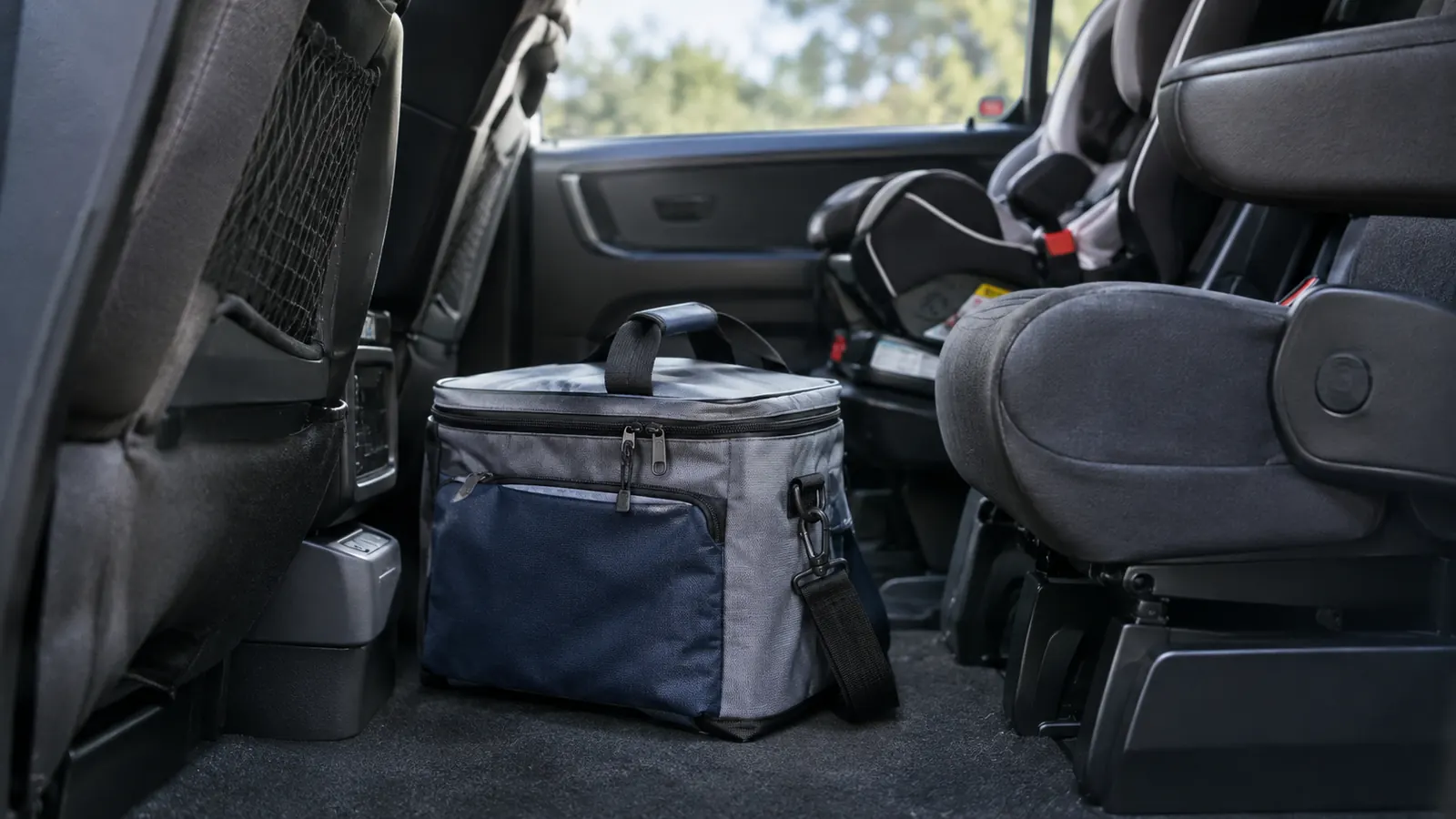
In the car, the Lifewit bag goes on the floor, not in the sun. The back window of the Odyssey gets hot, and direct sun on a cooler makes the ice work twice as hard. On the floor, between the seats, it stays shaded and it does not become a projectile if Dave has to brake suddenly. I also keep it out from under Ivy's car seat, because she still rides in a car seat and I do not want anything shifting into it.
At the rest stop, I open the bag, grab the lunch container from the middle, and close it right back up. I do not leave it open while we eat. That five minute habit keeps the afternoon drinks cold. And when we get to Boise, I empty the bag, wipe it down, and fold it flat until the drive home. The Lifewit bag folds down small enough to tuck behind the third row of the Odyssey, so it is always in the car for the next trip.
What Else Helps
A good cooler is only part of the system. I keep a small bag of cloth napkins and wet wipes in the front seat, because rest stop tables are always stickier than you expect. I also pack a separate small bag with the kids' cups and a bottle of water for the car, so the cooler is not opened just to get a drink. And I freeze a few water bottles the night before, not just for the cooler but to drink as they thaw. The Lifewit Cooler Bag does the heavy lifting, but the little habits around it are what make the whole trip feel smooth. For a two hour drive to a football game, I pack the same way but smaller: a few frozen bottles, the sandwich container, and a bag of apples, and it is plenty.
The Lifewit Cooler Bag kept our sandwiches, fruit and drinks cold through the full six hour drive to Boise, and it folded flat in the garage until the drive home.
Pack once, eat well all day
The Lifewit Cooler Bag is the large soft-sided cooler I reach for every family trip. It holds a full day of food for four, keeps it cold, and folds flat when the trip is over.
Amazon Check Today's Price on Amazon →