
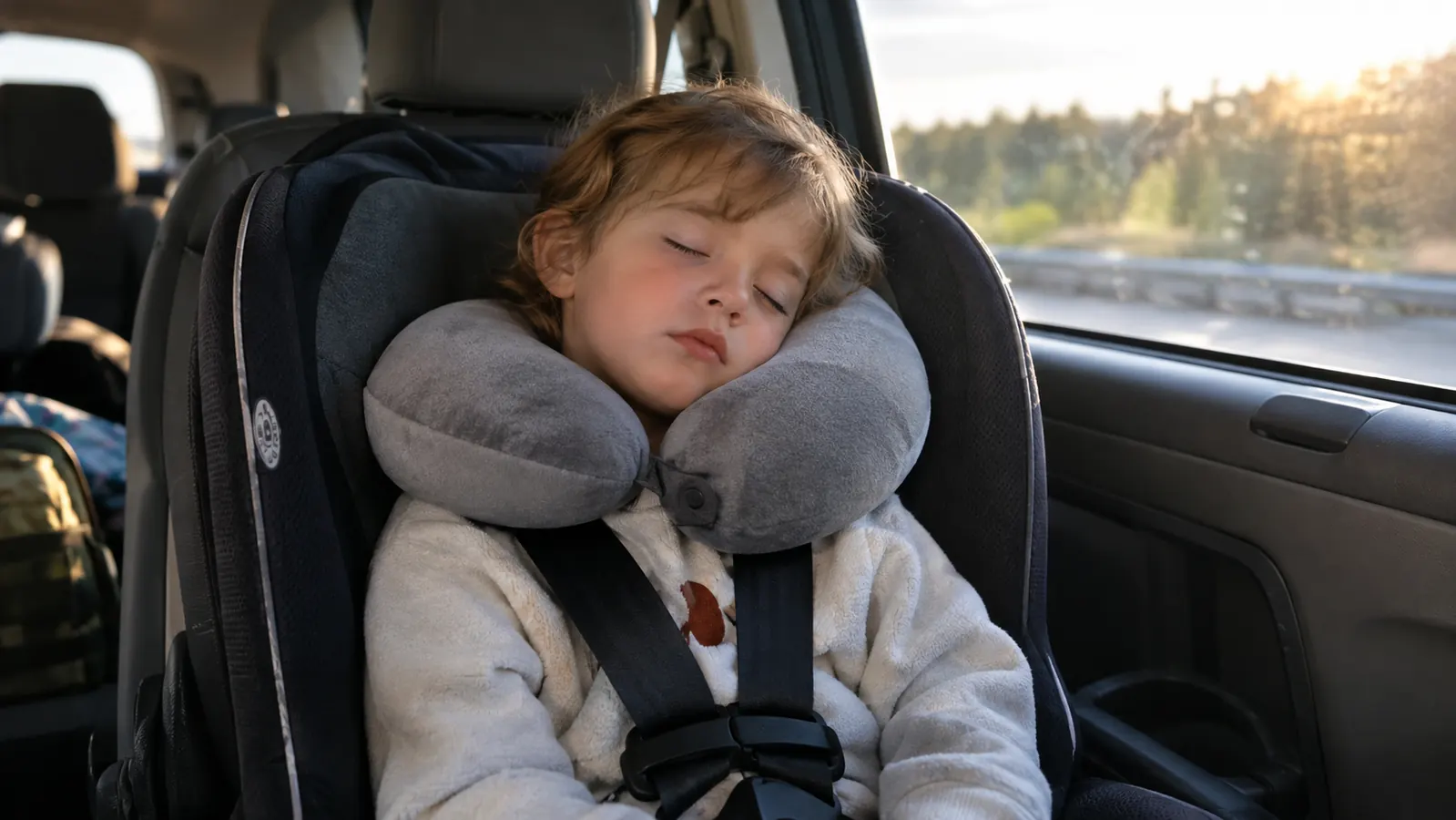
Every parent knows the scene. You are two hours from home, the kids have been quiet for a suspiciously long time, and you glance in the rearview mirror to see a small head bobbing forward, chin on chest, neck bent at an angle that looks anything but comfortable. They wake up cranky, you arrive tired, and the last hour of the drive is a negotiation about snacks and bathroom stops. I have done the Spokane to Boise drive to see my parents more times than I can count, and for a long time I just accepted that the last stretch would be rough. Then I figured out that the problem was not the drive. It was that my daughter Ivy had nothing supporting her head while she slept.
A travel pillow made for a child's size is the piece I was missing. The BCOZZY Kids Travel Pillow wraps around the neck and supports the chin from the front, so a sleeping head stays upright instead of flopping forward. It is made for ages 3 to 7, which fits Ivy, who is 5 and still rides in her car seat in our 2018 Honda Odyssey. We have used it for about a year now, on the Boise trips, on the way to Caleb's football games, and on our one flight to Orlando. It does not fix every car nap problem on its own. But combined with the right seat setup and a little timing, it has turned the last hour of our drives from a cranky countdown into actual rest. Here is the whole system we use.
The pillow that keeps a sleeping head from flopping forward
The BCOZZY Kids Travel Pillow wraps around the neck with chin support in front, sized for kids 3 to 7. It is the one we keep in Ivy's car seat for every drive.
Amazon Check Today's Price on Amazon →Step 1: Fit the pillow before you leave, not after they fall asleep
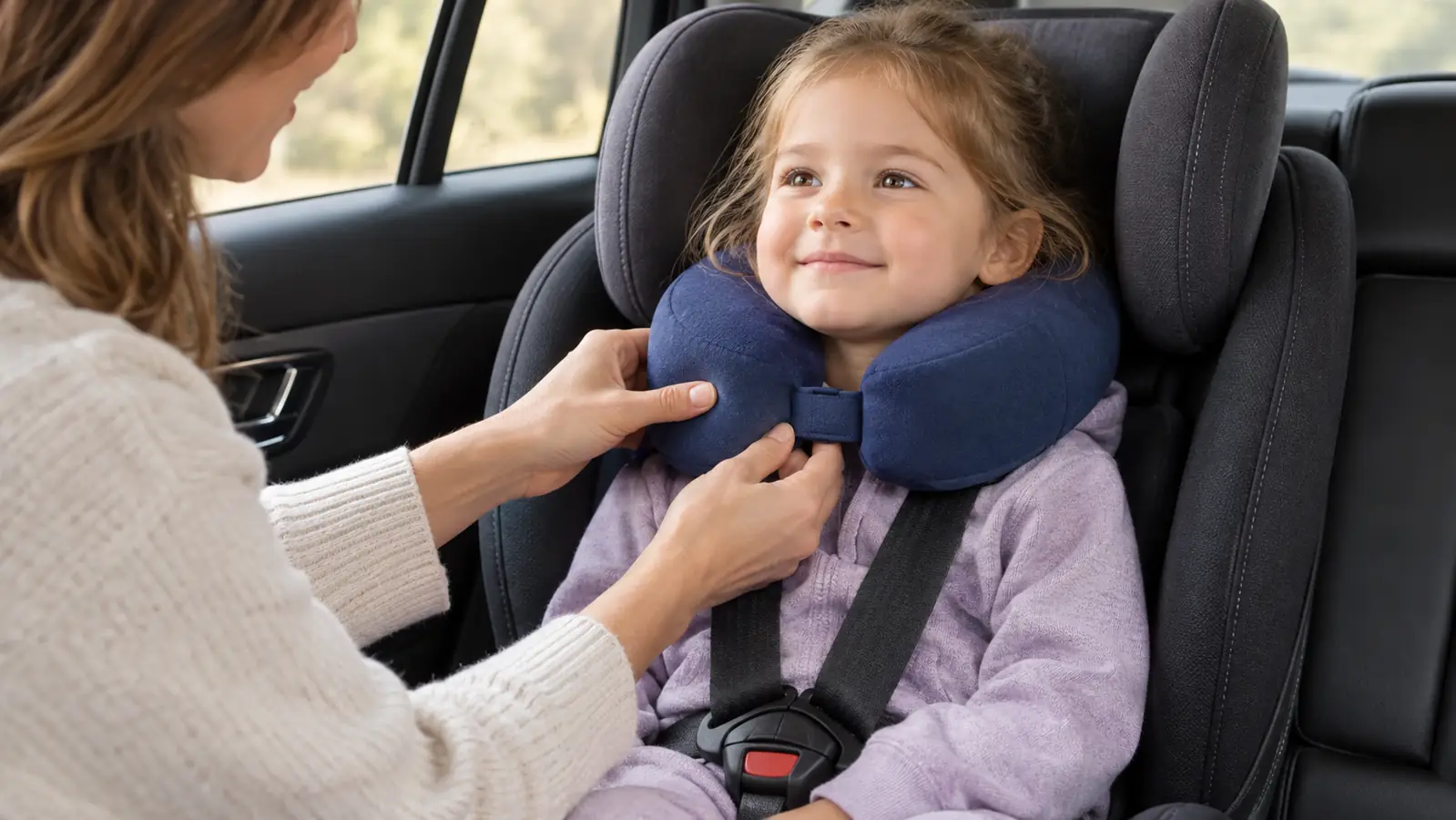
The biggest mistake I made at first was treating the pillow like a blanket, something to arrange once Ivy was already asleep. That never worked. She would wake up the second I tried to tuck it around her neck, and then she was too alert to go back to sleep. Now I fit the BCOZZY before we even back out of the driveway. It wraps around the back of her neck, and the wider part sits under her chin in front. The fit should be snug enough that her head rests against it without her having to hold it there, but loose enough that she can move her head freely when she is awake.
The chin support is the part that matters. A regular U-shaped neck pillow lets a child's head fall forward, because there is nothing in front to stop it. The BCOZZY has that front section, so when Ivy falls asleep, her chin lands on the pillow instead of her chest. Her head stays in a neutral position, which means she sleeps deeper and wakes up without the stiff neck she used to get. It also means I do not have to reach back and reposition her every twenty minutes, which is safer for everyone.
One thing I will tell you honestly: it took Ivy a couple of short drives to decide she liked it. The first time, she said it felt weird. I left it in the car, put it on her for a twenty minute trip to the grocery store, and by the second drive she was asking for it. If your child resists at first, do not force it. Let them wear it around the house for a few minutes, or just leave it in the car seat so it becomes part of the routine.
Step 2: Time the nap so it starts when the drive gets boring
A travel pillow helps a child sleep, but it cannot make a wide-awake child sleepy. The timing of the drive matters as much as the pillow. For us, the sweet spot is leaving about thirty minutes before Ivy's usual nap time. She gets in the car, we drive through the familiar part of town, and by the time we hit the highway she is already drowsy. The pillow is already in place, so when her eyes get heavy, she just leans back and lets go.
On the Boise trips, that means leaving right after lunch. We pack the cooler bag with sandwiches and fruit, load the packing cubes into the back, and hit the road by one o'clock. Ivy is asleep within the first hour, and she usually stays down for two and a half to three hours. That makes the six hour drive feel like three, at least from the front seat. On the way to Caleb's football games, which are usually one to two hours away, we leave early enough that she naps on the way there and is fresh for the game.
The opposite also works, and I have learned to use it. If we leave too early, before she is actually tired, she will fight the nap for an hour and then fall asleep twenty minutes before we arrive. That is the worst outcome, because she wakes up disoriented and cranky right when we need to unload the car. A little planning around her natural rhythm has saved us more than one arrival.
Step 3: Set up the car seat so the pillow has somewhere to work
The travel pillow does its job best when the car seat is already doing its job. Ivy rides in a forward-facing car seat in the middle row of the Odyssey, and I have learned that a few small adjustments make a big difference. The headrest should be at the right height, so her head rests against it naturally instead of hovering in front of it. The harness should be snug, because a loose harness lets her slump forward, which undoes everything the pillow is trying to do.
I also angle her seat slightly, if the car seat allows it. Many car seats have a recline setting that is safe for forward-facing use, and even a small angle change helps a sleeping child stay comfortable. I checked our car seat manual before adjusting anything, and I would tell you to do the same. The pillow is a comfort add-on, not a safety device. It should never change how the harness fits or how the car seat is installed.
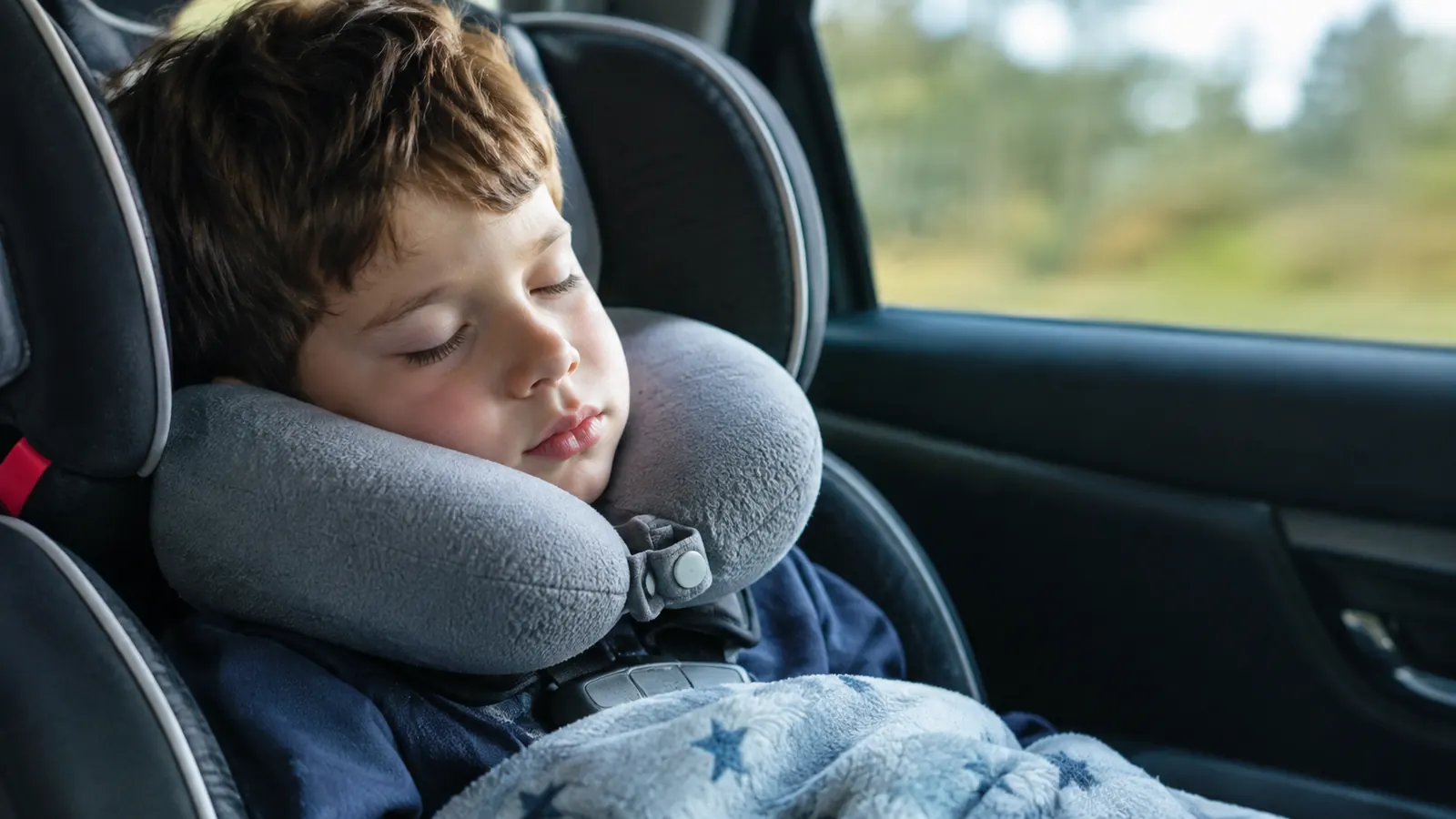
The other piece of the setup is the backseat organizer we keep on the back of the front passenger seat. It has a fold-down tray, and when Ivy is awake, she uses it for snacks and coloring. When she is ready to sleep, I fold the tray up and tuck a small blanket around her. The tray being out of the way means she can stretch her legs a little more, and the blanket helps her settle. It is a small thing, but it makes the whole sleep setup feel more like a bed and less like a car seat.
Step 4: Keep the car quiet and the light low
Kids do not need total silence to sleep in a car, but they do need the car to feel calm. Dave and I have a rule on long drives: once Ivy falls asleep, we keep conversation low and skip the loud music. We do not whisper, because that feels tense, but we do turn the radio down and let the road noise do the work. The steady hum of the highway is actually a kind of white noise, and it helps her stay down.
Light is the other factor. If the sun is on her side of the car, she will wake up. We keep a sun shade in the Odyssey for exactly this reason, and I clip it to her window before we leave. On the Boise drive, which is mostly east and south, the afternoon sun moves around, so I check the shade once or twice and adjust it. It takes five seconds and it has saved more naps than I can count.
I will also say this: do not let the other kid be the reason the nap fails. Caleb is eleven, and he knows the rule. When Ivy is asleep, he uses his tablet with headphones or he reads. He has been doing this long enough that he does it without being asked, but when he was younger, we had to remind him. If you have two kids in the back, the awake one is the wild card. A little planning for them, a tablet, a book, a snack, goes a long way.
Step 5: Plan the wake-up so they do not arrive cranky
The last piece of the system is the wake-up, and it is the one I used to get wrong. A child who is woken up abruptly by the car door opening is a child who is going to be difficult for the next hour. We now plan the wake-up the way we plan the nap. About twenty minutes before we arrive, Dave starts talking a little louder, I open the window a crack, and Ivy stirs naturally. She wakes up slowly, looks around, and is ready to go when we park.
If she is still asleep when we arrive, one of us stays in the car with her while the other starts unloading. That sounds like a small thing, but it means she gets five or ten more minutes, and she wakes up on her own instead of being jostled out of the seat. On the Boise trips, my mom always comes out to help, and Ivy wakes up to Grandma's face at the window, which is the best possible way to end a six hour drive.
The BCOZZY has made this whole routine easier, because Ivy sleeps well enough that she is not waking up mid-drive. When she slept badly, she would wake up an hour from Boise, and that last hour was always the longest. Now she sleeps through, wakes up gently, and walks into my parents' house like she just got up from a nap at home. That is the whole goal, and it is worth every bit of the setup.
What Else Helps
The BCOZZY Kids Travel Pillow is the centerpiece, but it works best as part of a bigger road trip system. We keep a small blanket in the car for naps, and Ivy has a favorite stuffed animal that she holds when she sleeps. The backseat organizer with the fold-down tray keeps her snacks and tablet within reach, so she does not have to unbuckle to get anything. And the cooler bag in the back means we do not have to stop for food, which keeps the drive moving and the nap uninterrupted. None of these things are fancy. Together, they make the car feel like a place where sleep is possible.
The chin support is the part that matters. When Ivy falls asleep, her chin lands on the pillow instead of her chest, and she sleeps through the last hour of the drive.
Give your kids the support they need to actually sleep on the road
The BCOZZY Kids Travel Pillow is sized for ages 3 to 7, wraps around the neck, and supports the chin so heads stay put. It has been in Ivy's car seat for a year of road trips and it earns its spot every drive.
Amazon Check Today's Price on Amazon →